

I used to be one of those people who didn’t take Donald Trump seriously.
I laughed. A lot. I figured the best way to deal with a guy like that was to point and say, “This is who you picked? Really?” America has survived incompetent presidents before. We’ve had our share of overconfident uncles at the nuclear barbecue. We managed.
I assumed a Trump presidency would be loud, embarrassing, chaotic — but survivable. A four-year migraine, not a fatal condition. Turns out that was optimistic.
Because there’s a difference between a buffoon and a buffoon with the launch codes.
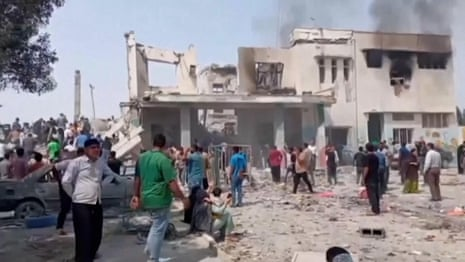
It’s hard to make fun of someone who treats the U.S. military like it’s a personal mood ring. Blowing up boats. Sending masked hoodlums to brutalize and kill civilians on the street. Leveling targets. Flexing power because they can. At some point the satire writes itself — and then stops being funny.
And now we’re bombing Iran.
Let’s pause and appreciate the genius of that decision.
Iran is not a random inconvenience on the map. It’s a regional power with allies, proxies, missiles, and a long memory. It sits at the center of a web of fragile relationships across the Middle East. You don’t just “poke the Persian snake” and expect it to wriggle back into its cave.
When the United States attacks Iran, it’s not a contained event. It’s not a tidy press release. It’s a spark tossed into a fireworks factory.
You get retaliation. You get proxy wars. You get attacks on U.S. troops stationed across the region. You get oil markets panicking. You get global economic shockwaves. You get other major powers circling like sharks. And suddenly the whole thing isn’t about one decision — it’s about escalation.
War with Iran isn’t a video game side quest. It’s a regional war starter kit.
What Donald Trump — and his knuckle-headed Secretary of Defense War — obviously don’t understand is that you can start a war, but you’re not necessarily in charge of how — or when — it ends.
Iran can’t beat the United States in a conventional, stand-up war. That’s not how this works. They fight asymmetrically. Through proxies. Through cyberattacks. Through targeted strikes. Through regional destabilization. They drag it out. They make it bleed slowly.
The U.S. ends up spending trillions. Again.
American troops end up deployed. Again.
Families get folded flags. Again.
And the Middle East gets more unstable. Again.
We have seen this movie before.
Iraq was supposed to be quick.
Afghanistan was supposed to be decisive.
“Limited strikes” were supposed to stay limited.
History suggests otherwise.
Meanwhile, at home, democracy doesn’t get stronger during perpetual war. Fear is a convenient tool. Emergency powers expand. Dissent gets labeled unpatriotic. Accountability fades. When a leader already flirts with authoritarian instincts, war is gasoline. War isn’t a branding exercise. It’s generational damage.
I thought I could grit my teeth and survive another round of chaos. I figured the bluster would be loud but ineffective. That incompetence would act like a guardrail. But incompetence mixed with Donald Trump’s strutting aggression is not harmless. It’s unpredictable. And unpredictability with the largest military in the world is not a personality quirk. It’s a global risk factor. So yes — making war on Iran is a dangerous mistake.
It risks regional escalation.
It risks American lives.
It risks economic fallout.
It risks pulling us into another endless conflict we can’t neatly exit.
And it risks further eroding democratic norms under the banner of “security.”
That’s not strength. That’s arrogance and ignorance dressed up as toughness.
If someone has a plan for avoiding that spiral once it starts, I’d love to hear it. Because history suggests that once the fuse is lit, it doesn’t wait politely for us to rethink the decision.
And we are very, very good at lighting fuses.