My Head, It Hurts

I had a migraine a few days ago.

Not the kind I used to get when I was young, a blinding, debillitating pain that wracked my cortex for a day and a half and made me throw up, or want to, and took me out of commission for days afterward. I don’t get those anymore, but I still get migraines.

At least I think that’s what they are. It’s in my head, so no one can see what I see, and no one can tell me what I have. But I had a swirling, shifting, writhing, silvery blind spot in the middle of my field of vision, which over the course of forty minutes moved out to the edges and eventually went away, leaving my eyes unwilling to look at anything bright, my ears unwilling to listen to anything loud and my head full of gravelly cement.

These vestiges are still with me three days later. Everything is difficult. I walk the halls with my eyelids drooping, almost closed. My job, which is child’s play, seems impossible. Driving on the freeway I find my car rushing up to the back of other cars who aren’t going the right speed. In the mirror, my face is haggard and colorless. I wonder who I am, who is this man who can’t do anything, who can’t stay awake and can’t sleep. There’s a piece missing from the middle, an empty place where my identity should be.

I’ve been through this before, once or twice a year, and each time I am grateful that it isn’t worse, like when I was twenty-five, and I had to go to bed and hope for sleep because no amount of aspirin would help. I always wondered what brought these things on, and I never found out. I’m just glad that I no longer wake up disoriented, dirty and disheveled, in an alley behind a cantina in Juarez.

Fellow sufferers, tell me of your pain, as misery loves company.

Share this:

Not In My Name

Ladies and gentlemen, your protest song is ready.


Note: If you don’t want to read the following long explanation,
you can download the song (“Not In My Name”)
by clicking or tapping on this clenched fist, or just press “play” right here:
I’ve been having a lot of fun for the past four or five months writing a protest song for the 21st Century. I’ve been able to spend about eight minutes a week working on it, so it’s not like I’m only producing like a minute of music per month or anything. If I were working on it full-time, adding up all these eight-minute segments I figure I would have finished it in a day or so.

For those who weren’t here or don’t remember, let me fill you in on this project.

On June 6th of this year, my good friend MPH at the blog Heightened Thoughts wrote the words “Where’s the music?” You can read the entire post here, but the gist is that we live in a world of violence, injustice and corruption, and our musical artists are strangely silent about it. Silent, that is, compared to the power and the energy exhibited by the musicians and songwriters of the 1960’s and 70’s. In MPH’s words, “What you had was a collection of artists really responding to the world around them…And it was powerful.” Today’s music scene, according to MPH, is just not providing us with the inspirational rallying songs of days gone by.

Fair enough, and maybe even true.

So, to help rectify this state of affairs (and have a little fun at the same time) I issued this challenge: If you are really angry, if you really want to protest, if you really feel like marching and singing, send me your angry lyric ideas and I will set them to music, record them and post the results on my blog. Who better to do this, than someone like me, the Oldest Blogger, who was actually there in the sixties and seventies, even though I don’t remember a lot of it? You can find my original challenge in the comments on Heightened Thoughts.

Then I began to hype the “uncontest.” Those of you who weren’t here for it can catch up by reading…

Those are the main three posts in which I exhorted you, dear readers, to send me your song ideas. If you take the time to read them now or later, you will also have the pleasure of re-reading the entire lyrics to “Eve of Destruction,” which I posted to show how easy it is to write a protest song.

Most of you were not eager to try this. Maybe you are not as angry as I thought you were. Maybe it was a stupid idea in the first place. But I did hear from some of you, and I also visited a lot of your blogs and captured your ideas for use in the song. Because, as I told you, the penalty for not writing this song with me would be that I would write it myself.

So here it is at last: “Not In My Name.” Those of you who helped, wittingly or unwittingly, I thank you. This list includes (but is not limited to)

and all the others from whom I may have stolen an idea. My plan here is to spread the blame around, so everyone gets a thin coat of it and no one – especially me – has to bear the entire responsibility. Don’t bother emailing me to have your name taken off the credits, because I won’t do it.

Share this:

Milestone

One-Year Anniversary.

I just realized that today is exactly one year since my first post on this blog. I thought about it a couple of months ago, and decided I wouldn’t mark it with a nostalgic entry reminiscing about the things I’ve learned, the people I’ve met here and in real life, the blogs I read, the blogs that have come and gone and all the history that has taken place in the real world, blah, blah, blah. But then I forgot about it until just now.

Weirdly, it has been a rollercoaster ride for me. I wouldn’t have expected it to be, but there you go.

As always, my heart longs to fly to you.

Share this:

Kick Me Hard In The Ass If I…

  • Rev my engine at stop lights.
  • Wear leather pants.
  • Talk down to a child.
  • Let you sweat out your own computer problems when I know how to fix them easily.
  • Don’t listen.
  • Use advertising slogans instead of real language.
  • Won’t admit when I’m wrong.
  • Feel sorry for myself when others have it so much tougher.
  • Attempt to comb over my bald spot.
  • Receive your signals and still don’t get the message.
  • Try to play lead guitar on “Bhodisatva” while drunk.
  • Ever again say anything to hurt you.
Share this:

Solitaire

Every now and then, for no reason I can figure out, a chill floats down onto me.

Cold settles on my shoulders, and when I try to shrug it off, it only slides farther down my body, until I am shrouded to the ankles in chilly fog.

Through this fog it is difficult to see clearly the people I love. Their faces are blurry and vague. Are they smiling, or laughing? The music in me becomes distant and muffled, and I can’t make sense of it. Like the sound of a band in the gym when you are smoking in the parking lot, it has no clarity, only a dull thumping, and I can’t find the melody, can’t catch up with the beat.

The things I do seem useless. All my projects – the protest song, the ongoing writing project that is this blog, the books I want to read, the music I am trying to record, the computer I plan to build, the places I want to go – who cares? Not me, not now. Would it make any difference if I did them or not?

Sometimes I go outside late at night and stand in the deserted street and look at the sky. Even through the haze and the lights of this big city and the fat October moon I can see a few stars, and I expand into the universe and I feel huge and empty and weightless with the the stars and after a while I can see the little guy down there on the street, so small, his arms waving toward heaven, and I think What do you want?

But I get no answer. From the street, from the stars, I get no answer.

Share this:

Staff of Life

White bread. Bad for me. But my weakness.

Today I found a half-loaf of white bread in the lunchroom. I was walking past when I saw a brown paper bag on one of the tables. Curious as always, I went in and took a peek. In the bag was the half-loaf. A round, bakery-style loaf of heavily processed bleached white flour, gluten and yeast, the kind of bread that has no nutritional value and starts turning into paste as soon as you put it in your mouth, then goes in and sticks to various parts of your insides, possibly forever.

I turned and quickly headed for the door, but the bread started calling my name. One little taste won’t be missed, I thought. So I went back and took a little bite.

My whole addictive system throbbed with pleasure. It was moist and soft, slightly chewy. Not a gourmet experience. More of a pig-in-mud experience. There was no butter, no cheese, no spread, and none was needed. There was also no bread knife.

I ripped off another piece of it with my bare hand, this one about the size of a small eggplant, and began stuffing it in my mouth. I held the remnants behind my back in shame and stuck my head out the door. No one was in the hall in either direction, so I hot-footed to my office, still pushing more of the glorious gluten into my face.

I got crumbs all over the floor in my office, but I didn’t care. I haven’t had bread like this in years. Get behind me, Worthless Loaf! Cease your siren song! Luckily I only had an hour of work to go before I could get the hell out of there, and back to my home, where I keep plenty of emergency celery.

Yum.

Share this:

The Swiss Are No Longer Neutral

Are you the Mystery Cougher? Am I?

Today at 5:30 in the afternoon I heard the new Ricola commercial on the radio. I immediately pushed the button to switch to another station, and they were playing the same commercial. Weird, I thought, and hit the button again, and heard the same commercial again. Thinking I had somehow switched back to the original station, I hit the button again, and heard the commercial for the fourth consecutive time. These guys are really carpet-bombing us.

I was forced to figure out what it was about, and now I share with you:

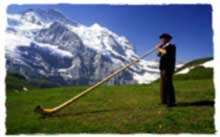
Ricola makes cough drops, and they have always had strange advertising. I remember one on TV that involved some guy in quaint Swiss folk garb blowing on a 20-foot Swiss horn in a subway car, for example.

But the current campaign is truly bizarre. They have a Mystery Cougher, a man (or maybe a woman, they hint) who goes around coughing near people. If you hear him and offer him a Ricola cough drop, BINGO! You win money, up to a million bucks! If this works, we will all have to buy at least one package of Ricola cough drops, and start offering them to anyone who coughs around us, because who can take a chance on losing a million dollars? I’m assuming this is a nationwide campaign, so that’s a lot of damn cough drops. But would you accept a cough drop from a stranger? Would you offer one? Would people call Homeland Security on you if you did?

Looks like we may find out.

Share this:

The Hill

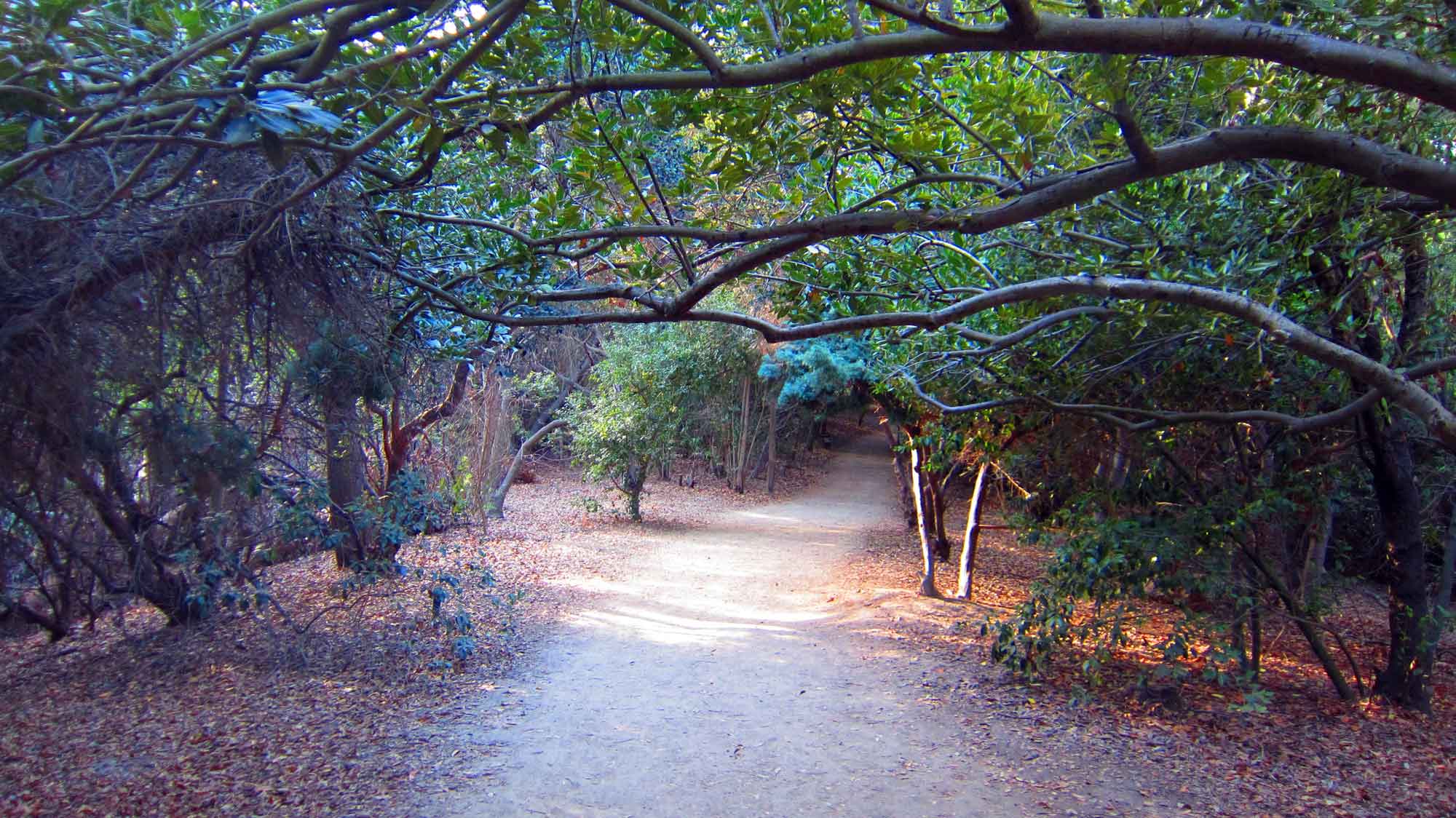
I trudge up the hill, alone in the dark.

Oil Pump

This is the hill that the kids came to in their cars all those years ago, after football games, after Friday night dances, and I can almost hear the giggling and the urgent exhortations. Boys and girls parking beneath the oil derricks on this desolate piece of land, a giant hump right in the middle of the city, lit by no light but the moon, disturbed by no sound but the grind and screech of the big oil pumps, sucking life from the hill like huge iron mosquitoes. The oil had mostly dried up ten years earlier, but a few pumps remained to make sure that every drop was sucked out. A lot of the derricks were still there, too, standing silent watch, ten-story weathered wooden lattices, relics of the drilling, no longer needed but not worth tearing down. The pumps huddled indifferently under their bases, pumping always.

Once you got to the top and parked the car, the view was breathtaking. This was before the streetlights were orange, and in the night the city stretched like a glittering sequined sheet all the way to the harbor, and the black ocean beyond could have been the very edge of the universe. You felt like you were flying, just standing there next to the car. I did, anyway. I might have been the only kid who actually saw the view, because even though I had a car, I never took a girl up there, to watch the submarine races, as we used to call it. I cruised it enough times, though, to know what it looked like, and I felt good up there alone, above it all, needing no one.

It’s the steepest hill in the region, and back then the pavement ended halfway up. Above that were just the twisting oil company access roads, dirt and gravel. No one lived up here, the derricks your only witness, except for the occasional squad car. Tonight as I walk, high-priced apartments line the freshly blacktopped roads, cheaply built boxes put here to cash in on that view, contoured into fancy-looking architectural shapes through the magic of styrofoam. The hill has been remade, too, primped up with landscaping and terraced lots for the houses, cut sharply into the earth. The derricks are all gone now, and the few stubborn oil pumps are hidden artfully behind stands of palms and local shrubs.

Once there was a nightclub at the very top of this hill. You’d drive along the deserted road in total darkness for a quarter-mile, you’d be aware of music playing somewhere, then abruptly you’d come upon a dirt parking lot lit by a few bare floodlights on makeshift poles. At the far end of the lot was the nightclub, looking like an island of corruption. An impossibly garish neon sign blinked

Cocktails Cocktails Cocktails,
and another promised

DANCING.

It was a low-slung cinderblock building with a boardwalk across the front of it, and a western style rustic wooden rail, like a hitching post. The bar served beer and shots, the bands played R&B and there were pool tables in the dark nether reaches. It might have been called The Hilltop Club, or The Rendezvous, or The Ron-Day View. There’s no trace of it now, and I can’t find anyone who remembers.

The hill had its own police department, company security left over from the oil boom, and maybe that’s why the ID check at the door was not as rigorous as in the city below. For whatever reason, my friends drank there. Come on, Jones, the Lost Boys would say. They don’t care how old you are, as long as you’re spendin’ money. I didn’t see the fascination, and my fear of being thrown out was greater than my curiosity. I regret not going now, like so many things I didn’t do.

In the end, I played in the band there, so I saw the place anyway, from the inside. I was too afraid to go in there just to see if I could fool them, but it was OK to do it if they paid me. I was not old enough to be working there, but no one ever asked about that. On stage I was a screaming showoff, shouting the blues like I meant it, but during the breaks I disappeared into the shadows, the better not to get found out and ejected. The irony of this behavior eluded me at the time. Strangely, none of my smartass friends ever saw me perform there, and eventually I came to wonder if they really ever went there.

Now I live in the shadow of the hill, and tonight I cruised it, like I used to. I don’t know what happened to the old roads. They’re not merely gone – their spirit is erased. There are guardrails and asphalt where once there were abandoned jalopies and loose gravel. Somehow, intersections and street signs have been contrived. The seedy nightclub has been razed and at the top, there’s a little park, a lookout point with a stone wall around the perimeter, concrete benches and a statue. Even the park is two-thirds paved.

I leave the car a few blocks down and walk up toward the park. I wonder if any of the boys and girls who used to make out here in cars are living in these town homes, and if so, are they living with the ones they made out with? When I reach the top there are teenagers there, some couples, some groups. I’m pretty sure I know what has drawn them here, but they are safely contained in the bright enclosure, so their natural urges are stymied.

I stand at the stone wall, and the view is still breathtaking. The streetlights below are mostly orange now – is that what makes it less magical? Or is it that we know each other better now, the city and me? I own a piece of it, and it owns a piece of me. I think about flying over the city, like I did when I was a kid, but instead I just feel like I’m falling, and in fact I stagger back from the stone wall, catching myself before I actually take off. After that I leave the teenagers behind, as I always have, and go back to my car.

When I get there, I stand by the side of the road and take in the unauthorized view for a final moment. The city has grown. It is so big and bright now that it eclipses the stars and dims the moon. It is full of living, dying, trying, crying. And out past the harbor, the very edge of the universe seems closer than ever.

Share this:

Don’t Think Twice

I was spellbound for two hours last night watching Martin Scorcese’s Bob Dylan documentary “No Direction Home.”

Maybe it’s because of my age — I was sort of there for the original events — but I couldn’t take my eyes off the screen. What a thrilling time that was, and how exciting it must have been for young Bob and the others who speak in this film: Dave Van Ronk, Maria Muldaur, Suze Rotolo (she’s on some of the old LP covers), Liam Clancy, Joan Baez, Mavis Staples – more than I can recall. New York City, 1963. The baton is being passed from the Beat Generation to Dylan and his circle. There are a million places to play. Dylan and the others are sponges, soaking up the old guys like Woody Guthrie, and each other, learning new music, new styles, new voices, and actually saying something in their songs. It’s not a concert show, but I was still fascinated and hugely entertained. Catch Part Two tonight (Tuesday, September 27, 2005) on PBS. In Los Angeles it’s on KCET, Channel 28 at 9:00 PM, but I think it’s a national presentation. This is history, folks, but fresh enough to feel contemporary. Most of the original players are still with us.

While I’m at it, I just want to say “Hurray!” to National Public Radio’s coverage of the ongoing hurricane disasters on the U.S. gulf coast. These stories, mostly on the afternoon news show “All Things Considered,” are precious documents. Heart-warming, heart-wrenching, visceral, surprising, maddening, informative, in ways I just don’t see the mainstream media doing. The 79-year-old woman who lived alone, floating inside her one-story home on her Stearns and Foster mattress for eight days before she was rescued (“It must have a lot of wood in it…”). The New Orleans pump station worker caught by NPR’s reporter dozing on the job – because he had not deserted his post for three weeks nonstop. The man who sent his family to safety and doesn’t even know where they are, while he stayed behind to assist whomever he could in his 9th Ward neighborhood. This is why we need public radio and television, my friends. Tune in and see for yourself.

As always, my heart is yours alone. And again, I might owe some of you an apology. Please forgive my transgressions. I am socially inept, and I should know better.

Share this: