Bailout Blues

My biggest problem with the Bush Administration’s bailout plan is the Bush Administration.

I don’t want the economy to collapse. I’m pretty cranky about the greed, dishonesty and outright stupidity that got us to this point, but I do agree that something probably needs to be done. I say “probably” because I don’t really understand the problem, and the more I read and hear about it, the more I wonder if anyone understands it. Certainly there’s no one on CNN who’s been able to explain it to me in anything better than third grade terms.

So, sure, let’s do something, but here’s the problem: I don’t trust the Bush Administration. Of course, I just generally dislike them for all the usual liberal reasons — I won’t go over them again. But the real problem is that they might be lying. I mean, after the selling of the invasion of Iraq, in which the administration simply made up a bunch of shit, spread the lies vigorously through compliant and supposedly “objective” media, and acted like it was a great big emergency and we had to hand over unilateral war powers to Rove/Cheney/Bush right away and don’t be asking any questions, why should I believe them now?

I can think of various reasons why they might be lying. They might be simply continuing their policy of destroying the federal government because neocons just don’t like the federal government. They might be trying to stall the collapse just long enough for John McCain to get elected. They might already know that John McCain can’t be elected and they might be trying to hand President Obama a big steaming plate of shit sometime next Spring. Hell, George Bush might actually be thinking about his “legacy,” as if he has a chance of salvaging anything there.

But after eight years of this administration playing fast and loose with the truth, why should I swallow their latest cries of impending doom and pony up my share of seven hundred billion dollars? Somebody needs to convince me that Hank Paulson won’t just tuck it into his vest and apply for his old job at Goldman Sachs. You might think that’s pretty far-fetched, that such a thing couldn’t happen in the United States of America. I refer you to the “election” of 2000, in which a barely literate nincompoop got picked to be President despite not getting as many votes as his opponent. Things can happen, folks.

I don’t know exactly how this could be handled in such a way that we won’t have to wonder if it’s just a gigantic bank robbery, the equivalent of George Bush and cronies grabbing the silverware and the chandeliers on their way out of the halls of power. But until somebody smarter than me in Washington has an idea, I’m OK with this bailout not going forward.

Share this:

The Sky is Falling! Or Is The Bottom Dropping Out?

A look at my personal bank account will quickly reveal that I am not a financial genius.

Million Bucks

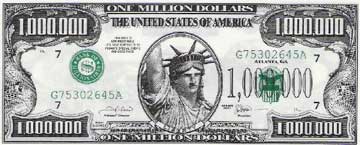
Still, even without a degree in economics or any investment track record, I want to go on record right now as saying that something stinks about this 700 billion dollar bailout of Wall Street companies. For starters, let’s all admit that the 700 billion is just… for starters. When has the government — no matter who’s been in charge — brought anything in within budget? Say it with me now: Never. But that’s not my real complaint. Heck, 700 billion here, 700 billion there — once you get the numbers up in that category, what’s the difference, unless they’re literally trying to see if they can spend all the money in the world?

At first I had the typical knee-jerk reaction: “Who the hell do these assholes think they are? They’re making millions of dollars in salaries and bonuses, rockin’ and rollin’ all over Wall Street, operating with no restrictions or government oversight, and all the profits are private, and now that they’re in trouble — trouble of their own making — they want me to pick up the tab for the party, and put the empty cognac bottles in the recycling bin?”

But then I admit I took a pretty big pull from the “too big to fail” kool-aid. You know the argument: These financial institutions hold so much paper, and so many homeowners and business owners and banks and corporations are interconnectedly dependent on their stability that we must save them, just this once, and then we’ll figure out some new regulations and get back to business and this will never happen again and we’ll all be part of The Ownership Society and everyone will be happy.

But now I’m back to my original “what the hell?” position. Over the weekend, Secretary of the Treasury Henry Paulson jotted down a three-page memo that he would like to have Congress pass into law. The law would give him a metric buttload of cash (see above, 700 billion dollars) to do with as he pleases. What he says he wants to do — I think — is buy a whole bunch of bad mortgages, which — I think — will ease the “credit crunch” (sorry, don’t know what that is really), which will in turn restore stability to the economy, and then everyone will be happy. I haven’t read the whole thing, but here’s my favorite part so far:

Sec. 8. Review.

Decisions by the Secretary pursuant to the authority of this Act are non-reviewable and committed to agency discretion, and may not be reviewed by any court of law or any administrative agency.

Nice, huh? No pesky legislators or — AARGH! — judges nosing around and asking questions. Every hedge fund manager knows those guys don’t know squat about money and shit. They’d have everybody in three-piece pin-striped suits, and reading credit applications all the way through before granting loans. How can you make any money that way?

Speaking, as I am, from a position of not really knowing anything for sure about this big money meltdown, I can only say that I am freaked the fuck out.

  • Bear Stearns out of business.
  • Fannie Mae and Freddie Mac nationalized.
  • Lehman Brothers out of business.
  • AIG bought by the government.
  • Merrill Lynch sold to Bank of America.
  • 4 million homes foreclosed (no one knows how many more are at risk).
  • No one seems to know which lenders are holding whose loans and whether the borrowers are willing — or even able — to pay.

That last one is another way of saying that we haven’t seen the bottom of this plunge yet and we don’t know how far we are going to fall or even how close to the bottom we are. Don’t try to argue with me on that. Anyone who says they know what’s going to happen next is bullshitting.

So if that’s true, what is Paulson going to do with the 700 billion, really? I think we can stipulate that it would only be a down payment on what is really needed. It’s probably enough to prevent total global economic failure at least until November 4, which might or might not help John McCain get elected. It seems like a lot of money, doesn’t it? I know it does to me. But if you estimate the world’s total global production at around 60 trillion dollars, which a lot of smart people do, it’s only 1.17% of that. Barely lunch money.

So who’s kidding whom? I agree that something must be done. Maybe the 700 Club is the way to go, maybe not. But not without some adults watching to make sure Paulson doesn’t just use it to help his friends on Wall Street, while stiffing everybody else. Hey, he was the CEO of Goldman Sachs before he was the Treasury Secretary, right? And guess where he’s going when he’s done with this little government job?

Bail all you want, Henry. But I hereby require that Congress amend your little memo to include some accountability to me, one of your bosses and one of the ones who’ll be paying the bills you run up. Also, I want those profligate CEO’s, hedge fund managers, investment brokers and other Wall Street ne’er-do-wells all to be given $40,000 a year jobs, and when they need a bailout, they can call their parents.

____________________________________________

For a nuts and bolts history of what has happened, check out this post, and thanks to Kathleen for the link.

Share this:

Won’t Get Fooled Again

I have to say something about John Edwards now. Don’t worry — this will be short.

I’m sad. The world we live in is fucked in so many ways. The longer I live (hint: It’s already been way too long) the worse it gets. Global climate change, the collapse of the world financial system, the rise and apparent superiority of authoritarian government (see China), peak oil, the unending appetite for war and more war, the closing of all the libraries, the Minnesota Vikings, the corrupt and inept Bush Administration, the destruction of Labor and the middle class in the U.S., and on and on.

But I still wanted to hope. I still wanted to believe that we as humans have a better nature, and that with a little leadership and inspiration we can overcome our bad selves and work together to raise us all up to a higher level and create a happy, thriving planet on which we spend our energy and resources making things better, instead of simply stealing the better things from whomever already gots.

I thought that was the John Edwards message, and it appealed to my hopeful instinct. I thought that if a guy with such a vision could even get close to competitive in our rigid two-party presidential system, maybe things weren’t so bad after all.

But even as he was putting forth his hopeful message he was, it now appears, sabotaging himself, and — if he had won his party’s nomination — wrecking the nation’s chance to escape the criminality and venality of the modern Republican Party. For surely his affair with Rielle Hunter would have been exposed, as it has been, and presto! — President McCain.

I supported Edwards, and when he dropped out I was disappointed, but the reality was that he was not getting the votes he needed. I couldn’t see why, because Edwards seemed to be the answer to a lot of our wishes. But you have to be practical. I switched my support to Obama, and kept hoping that Edwards would either be on the ticket or in an eventual Obama cabinet.

I don’t really care about the infidelity. I don’t know how it happened or why. It’s none of my business. But I do feel conned. I’m mad at myself more than at John Edwards, because I was all pumped up and ready to buy the snake oil.

I was right. Things are fucked. There is no redemption.

Share this:

The Chinese Millennium

I watched the opening ceremony of the Beijing Olympics last night.

Stadium

I probably shouldn’t have. I should have boycotted it, what with the bad human rights record the Chinese have and all, and the way they treat the Dalai Lama. I mean, it’s a repressive regime, no getting around it. Our president didn’t mind too much, though. He was there in the front row, to see and be seen. But then Bush seems comfortable with doing the bidding of others, as long as there’s profit in it for his family and friends. The Chinese own so much of the U.S. that Bush might not have had a choice in the matter anyway. What do I know?

But talk about keeping order! The new Olympic Stadium, called “the bird’s nest” over and over again by commentator Matt Lauer, was filled with 91,000 spectators, and the government thoughtfully provided 130,000 cops at the venue, probably to give directions and retrieve lost children and stuff. Oddly, no fights broke out.

I’m already sick of the Olympics, because I watch The Today Show every morning as I’m trying to start my day, and NBC — by virtue of a billion-dollar payoff to the Chinese Olympic Committee — is the exclusive purveyor of all things Olympian to the U.S. television market. They started months ago with a daily “Countdown to Beijing.” Daily.

Every morning they interviewed some jock or other, and showed an inspiring video about their struggle to be the best. Then Ann Curry or Meredith Viera would put on a fencing suit or a pair of shorts and engage in a little swordplay or maybe some beach tennis (yes, it’s just like beach volleyball, only not) out on the street in front of 30 Rock, all in fun, until somebody fell down, and then “…this is Today, on NBC,” and cut to that glorious trumpet fanfare they’ve been using on NBC since the LA games in 1984. Three months of this. I don’t care to see the games, since they no longer include team handball.

But that opening ceremony – whoa! Fifteen thousand performers. An LED video screen 400 feet long, that you can dance on! An epic pageant, displaying the history of a culture that is thousands of years old. Who even knows when they started? But I can tell you this: the Chinese invented paper and movable type. They invented the magnetic compass. They invented gunpowder, and the subsequent stuffing of it into rockets. So they were able to sail safely to far off lands, shoot the bejeesus out of the natives, find their way back, and write it all up in the Sunday papers.

And what did we learn from the scene where a thousand or so invisible Chinese carried a dance floor the size of a basketball court around on their shoulders while a solitary woman danced evocatively on top of it? That the glory of any achievement is possible only through the anonymous labors of many, many faceless laborers. And what lesson from the part where the beautiful children carry the flag around the floor of the stadium (excuse me, the bird’s nest), smiling and waving, only to have it snatched officiously by uniformed soldiers and run up the pole, where artificial breezes unfurled it only at the very top? That children may be the future, but it is The State that will protect and defend that future. Out of the way, kids!

I really only watched to see the fireworks, and I have to say they were not disappointing. At one point early on, the entire city of Beijing was used as a stage, as footprint-shaped explosions took place in the sky, 29 of them, symbolizing the 29 Olympiads of the modern era, each one a half-mile apart, pefrectly synchronized and marching to the bird’s nest. Holy shit, you’d never get the permits to do that across all the districts and municipalities of Los Angeles. And once the show started, there haven’t been so many rockets in the air since Bush took Bagdhad. I mean, it wasn’t launch-boom! launch-boom! launch-boom! It was more like the sky was on fire. It’s amazing the kind of fireworks you can buy for a billion dollars.

Anyway, the Chinese wanted to show that they’ve arrived, and they really showed that. They didn’t want any dissent, and by damn, there wasn’t any, that you could see, anyway. They wanted to show that they can plan and pull off stuff with precision and on a gigantic scale, and there’s no doubt — they did it, big time.

I surrender. There is no way to stop the Chinese. They are alien (like, totally!), they are many, they are ancient, they are modern, they are clearly superior. Learn the language, folks. This will be the Chinese Millennium.

Share this:

Eternity or the Franklin Stove?*

I do the laundry at my house.

OK, let me refine that: I take the laundry from my house, once a week, down to the local laundromat, and do it there. Three to six washer loads, two to four dryer loads, bring it home, fold it and put it away. Real men are not embarrassed to admit stuff like this. I do a damned fine job of it, too, producing visibly whiter whites, brighter brights and sharper creases. Because I have moved around a lot, and never really got set up with a washer and dryer, I’ve been doing it this way for most of my life.

For about as many years, I’ve been playing guitar in rock bands. At first I had a guitar bought at Sears, a Silvertone. Later I had a Harmony thin hollow body two-pickup single cutaway electric, shiny black and looking from a distance quite a bit like George Harrison’s Gretsch Country Gentleman (the only guitar I’ve ever seen with button upholstery on the back).

In San Francisco I started a band called The Hots, with a couple of guys from New York named Thom and Pfeffer. They had packed up and driven their ’67 Mustang to California, where they found that nothing was as good as it had been in New York, and the stores weren’t open as late, either, goddamnit. Still, they had come to town hoping to catch a little of that San Francisco Airplane-Dead-Quicksilver-Santana mojo, so they stayed and we played.

I thought things were going pretty well, but one day they sat me down to tell me that I needed a better instrument. They said I didn’t seem to take pride in my guitar, the way musicians in New York did. They said my guitar didn’t sound right, didn’t look right, that it was shabby, and too cheap. Since they wouldn’t shut up (New Yorkers, remember?) and since we were going to be big stars and have lots of money, I decided to humor them, and that’s when I made the first truly killer deal of my young life.

I went to a hock shop on 3rd Street, just below Market, and bought a 1961 Cherry Wood Gibson ES-355, with a hard shell case, for $275. I’ll wait while you look on eBay to find out what that guitar is worth today.

OK, got it? No, it’s not for sale. $275 was a lot of money to me in those days. I had to borrow some of it and I really sweated the purchase. But once I had that guitar in my possession, once I played it in the band, stroked it and fingered it and caressed it, once Thom and Pfeffer got a load of it, I was so high that I didn’t need to smoke anything for a month, and I dreamed about that guitar for the whole month, played it every waking moment, polished it every day.

Over the ensuing decades I’ve played that guitar and others on a thousand bandstands from cheesy to regal. I became a journeyman player, but even though I never got to be a rich rock star I never regretted the money I spent on the 355, or the J160, the Strat or the Blackjack.

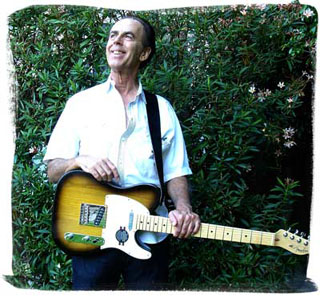
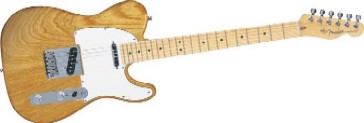
Lately I’ve been thinking I need a new guitar, and the one that’s calling my name is the Fender Telecaster. I’ve looked at them online, and discovered a bewildering array of sub-models: the Standard, the American Standard, the Deluxe, the Baja, the Highway 1, the Classic ’72, the Vintage Hot Rod ’52, the Thinline… well, the list goes on for 9 pages on the Musician’s Friend web site, with ten entries per page.

But I went to a store that had a bunch of them, and I played them all, compared the sound and the playability, sorted through the various features and I picked one. I picked one, but I didn’t buy it, and now I can’t stop thinking about it. With this guitar, I imagine, my life will change. I will find The Lost Chord, and when I play, the angels will sing! I wake from a sound sleep with the Tele twang ringing in the room, the fretboard under my fingers, and I think maybe today I’ll go back to the store and bring that baby home.

But I hear this other voice in my head, a practical voice, and this other voice is making a sensible suggestion:Â Instead of another guitar, when you already have so many, it says, why not get something for the home, something you can really use, something you don’t already have? Why not buy a washer and dryer?

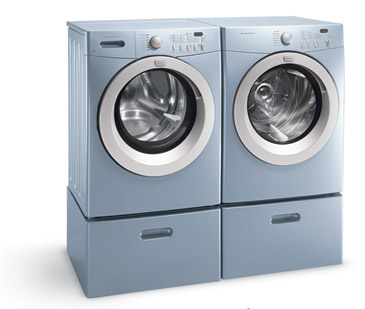
I have to admit that there is logic to this idea. I spend two hours doing the laundry every week, and that time is devoted entirely to the mundane task of getting our clothes ready to wear for the next week, over and over, every week. Nothing new is produced, and nothing permanent. The next week, I have to do it all over again. If I had my own mini-laundry at the house, I could do a load of laundry whenever one was needed. I could do small loads, hot loads, delicate loads, using settings that don’t even exist on commercial washers. Of course I couldn’t do six loads all at the same time, but this inefficiency would be balanced by the convenience and efficiency of being able to wash some stuff whenever. While the machine was doing its thing, I could be in the home studio, playing one of the guitars I already own, writing new songs, creating my Art. And let’s not forget about all those quarters – it’s costing 400 bucks a year in quarters to do things the way I’ve been doing them, so a washer and dryer would pay for themselves eventually (you could make a similar argument for the Telecaster, but it would really be a stretch).

Why does life have to be cluttered with these compromises? I can hear both of these voices, both of their arguments, clearly. They both make sense to me. One tugs my heart, one appeals to my brain. Is one more important, more valid than the other? Ben Franklin’s handy cast-iron indoor fireplace (the Franklin stove) brought modern technology to bear on an enduring problem of life in much the same way a washer-dryer would address my own situation, but what have we lost because of it? While Ben worked on his invention and all his other devices (bi-focals, mousetraps, etc.), he may have solved practical problems and made life easier for us all, but he wasn’t putting his great mind to work on the Eternal Questions (who are we? why are we here?). There’s no doubt now that humanity has decided to rely on technology and engineering, but are we really better off with homes that are comfortably heated at all times? What if there were more philosophers, painters and songwriters, and fewer answering machines and 500-horsepower sports cars? Are we in balance with our planet, with our nature?

In short, which fork in the road do I take now?

Eternity?
Eternity

or the Franklin stove?

Franklin Stove

_________________________________________________

*Title lifted verbatim from an essay in a textbook collection I read in high school. Can’t remember the name of the book or who wrote the essay. Help me if you can.


Share this:

Life and Death

When we lived in Austin, the “lake” was a couple of hundred feet outside our back door.

There was our back door, then a little patch of dirt that would be the back yard in a nice neighborhood, then a gravel track, not a street, not an alley, then a short embankment that led down to the polluted water. Everybody in town knew not to go in it, because the Hormel packing plant was using it to dump their waste. Whatever chemicals and entrails they didn’t put in the Spam went in the water. The lake was brown and lifeless.

When I was a little boy, I killed a frog back there. I remember it was a cloudy morning, and wet, I think. I found the frog near the gravel track. I must have been afraid of it. I held it by one leg and threw it into the air as high as I could. Again and again. I was laughing, to convince myself that I was having fun. After a while the frog stopped writhing on the ground when it landed. I threw it in the lake then. Walking back to the house I had a strange, empty feeling, with all the mirth drained out of me.

I had to tell someone I had killed a frog, and how funny it had been, to see him flying so high, spinning out of control, then falling, falling helplessly and splat! Hitting the gravel, or the dirt, and bouncing, and then the stupid thing couldn’t get away from me, so I caught him again and threw him up again, ha ha. I wanted it to be so funny, not serious at all.

My mother was shocked. The look on her face told me what my heart already knew: I had sinned against Nature, snuffed a life. I had been the ultimate bully, torturing and killing for no reason at all. When my father came home, he suggested that the frog might have been a father himself, and there might be a frog family waiting for him to come home. But he would never come home now. I pictured our family, my mother and me and my brothers and sisters, waiting for my dad to come home, not knowing what had happened to him. I was devastated.

Years later, when I was living in California, I heard that Hormel had cleaned up the lake, and promised not to dump any more poison in it. I don’t know. The maps I’ve looked at don’t show poison or death, only streets and buildings. But I know there are some things you just can’t clean up.

Share this:

Standing At The Station

I have no excuses.

Train Station

I wasn’t misunderstood.

I wasn’t ahead of my time.

I wasn’t fiercely independent.

I just missed the train, all the trains, over and over again. Stood nervous on the platform, and waited.

Waited for the next train, and the next.

Drank at the station, taking notes, making lists. Ready to get on, soon as I completed my list.

Read the big board, all the cities along the track, distant destinations. Oh, Atlanta! Memphis, Austin, Eugene. Might as well have been Mars.

Didn’t want to catch the wrong one, get my only ticket punched for the wrong town.

Along about midnight, picked up my bag and went on home, whistles cryin’ in the night.

Share this:

Later, Alligator

Five years after I saw “Rock Around the Clock” I got my first guitar.

By that time, my mother had moved me and my two brothers and two sisters from Minnesota to Southern California, on the run from domestic chaos. I don’t know exactly when my parents’ marriage started to disintegrate. I was too young to understand, and I guess I still am, but that’s another story. I mention it here only because maybe coming from a “broken home” somehow made me want to be a performer.

Certainly I was a fish out of water in California. Shell-shocked by the divorce, transplanted to an immense and unknowable city, just about to start my teen years, I found myself alone among the super-hip, super laid-back kids of Torrance, California. I was far ahead of them academically, but that didn’t matter to them, and eventually not to me, either.

I started ninth grade with no contacts at the school. There were a thousand kids at Stephen M. White Junior High School, the largest student body I’d ever been part of. Ninth grade was the third year of the three-year program there, so everyone pretty much knew everyone else, except for me, or so I thought. It wasn’t horrible, but I found myself alone a lot. I made a few male friends and mostly fantasized about the beautiful, aloof, tan California girls. It was during that year that I heard live rock’n’roll for the first time, at school dances and assemblies. They were surf bands — lots of twangy electric guitars, lots of reverb, not much singing.

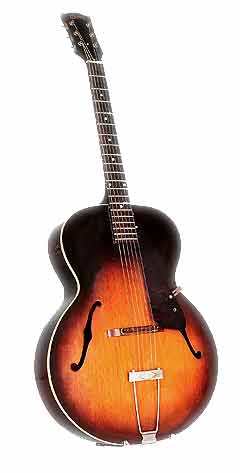
The next year my mom bought me the guitar. We got it at Sears, brand new for about thirty-five dollars. It looked like this:
First guitarI had no idea how to play it, but I’d been hanging out with another transplanted misfit, a transfer student from Oregon named John McClain. He’d taken piano lessons for quite a long time, and so he knew chord structure. By that time (1964) the writing was on the wall, and it was clear that the guitar was going to be cooler than piano, not to mention more portable, so John got a guitar, too, and together we figured out how to play chords, translating what he knew from the keyboard to the fretboard. Pretty soon we were copying licks from Rolling Stones records (themselves taken from Howling Wolf, Muddy Waters and Chuck Berry records).

I can’t remember how long it was before we decided we were a band. Maybe six months, maybe a year, but here is where we’re starting to get to my point.

See, a rock band is a team, in some ways like a sports team. There has to be coordination and practice to make it work. The big difference is that in a band, you might find yourself playing with a bunch of people who all want to do something different. In athletic terms, it could be like playing on a team with a power forward, a quarterback, a shortstop and a goalie. Everyone’s a jock, and while this is clearly not the ideal situation, everyone is skilled, and whatever game you happen to be playing, there’s at least a reasonable chance the team can hold it’s own.

In bands, this mix-and-match thing happens because at first, you know who you know, and if one of your friends happens to play drums and you don’t know any other drummers, you sign him up, even if he’s mostly into Sousa marches. It’s not like you have a lot of connections and you can select the perfect drummer to complement your own musical style. Circumstance threw me together with John McClain, and it was a useful collaboration for a while, but in the end he was more Tony Orlando and I was more Hank Ballard. We still played together for a year or so after that.

As you grow up and play more places with more people, you have a better chance of hooking up with the “right” players, musicians who have the ability and the inclination to work in the same sort of musical style that interests you, but in my whole life I’m not sure I’ve ever been in a group or even known a group in which everyone was exactly happy with what was happening and all the players were on the same page musically. Naturally when there’s enough money involved you can take your pick of great players and make them do what you want, but A.) this scenario (tons of dough) is rare, and B.) if you’re a sensitive creative artist you might want to feel as if your bandmates are diggin’ it as much as you are.

Now I will tell all you aspiring musicians a secret. This is not the secret to landing a huge record deal and having a billion fans and hooking up with nubile models in the hotel room. Obviously, I don’t know that secret. This is the secret to making a living playing music. It’s so simple I don’t know why it’s a secret, or why it took me thirty years to discover it. Ready? Here it is: Find a niche and stay in it.

If you want to play the blues, play the blues. Or be a zydeco band, or a klezmer group. You could play R&B, folk-rock or bluegrass. But the key is to be consistent. Develop a style. Be the band your audience expects to hear, every time. Because there is a blues crowd out there, and a soul crowd, and a folk crowd. If you try to do everything, you’ll be competing with everyone. If you try to play a little blues, a little speed metal, a little punk and a little jazz, you won’t be as good at any one style as those who do only that style, and you won’t have an audience, because those who were hoping to hear a little jazz will walk in after you’ve played your jazz number, or they’ll leave before you get to it, and all they’ll hear is your rendition of Black Flag’s “Nothing Left Inside,” and they will never come back.

If you find a niche and stay in it, you’ll probably never have a billion fans. But eventually you’ll have 5,000 fans, and they’ll come to every gig. You’ll be playing music and making a decent living.

So I am dismayed when someone in my band wants to do a song that, in my opinion, doesn’t fit in with anything we’ve been doing, a song that is so not in the groove we’ve been building, a song demanded, perhaps, by some faction in the audience which does not like the niche we are working within.

A song like “Kryptonite.”

I know this was the long way around for this explanation, and I’m sorry. Believe me, I could have gone on for much longer. But down at the bottom, here’s what I’m saying: I can’t play with anyone I want. I have to play with who I know. I’m trying to have fun with this, and if I look for the Perfect Situation, the fun will be delayed, possibly forever. And I want to focus on a particular musical niche, and I want these guys to enjoy what we’re doing, because the pleasure is infectious and feeds on itself and makes everyone (especially me) happy.

We’ve got a gig tomorrow night. Lawyers. Why does it have to be lawyers?

Share this:

After ‘While, Crocodile

Music has always thrilled me.

Rockin'

As a little kid I remember a cheesy portable record player, with a tone arm heavy as a log and a needle on the end of it as big around as a No. 2 pencil. Maybe it was the equipment that fascinated me as much as the music, because, really, all I had was a Gene Autry record, a 78, I think, Gene singing “Here Comes Santa Claus” b/w “Rudolph the Red-Nosed Reindeer.” There had to be other records, but my memory is hazy. There might have been a comedy record by a guy named Yogi Jorgensen, who pretended to be drunk. I might have had “How Much is That Doggie in the Window?” by the fabulous Patti Page. Hey, don’t blame me. I was four years old. But I enjoyed messing with that little record player, and I played those records until my parents must have wanted to scream. I shudder today when I think what the tone arm and stylus must have done to those poor old discs with every play.

You might think it was a lame time for white American music. But it was the very early 1950’s, and I know now that there was a lot of cool stuff going on. Just not at our house. Musically speaking, I guess my parents were dorks. It wasn’t their fault. I remember the music that came on the television: Burl Ives, Perry Como, Dinah Shore. I was so brainwashed that when Elvis showed up on The Ed Sullivan Show in the Fall of ’56, when I was 8 years old, I was as disgusted at his filthy gyrations as The New York Daily News, which reported that Elvis “gave an exhibition that was suggestive and vulgar, tinged with the kind of animalism that should be confined to dives and bordellos.” Hmmph.

The following year I went by myself to see “Rock Around the Clock” with Bill Haley and the Comets, and I think I can say it changed my life. I had never seen anything like it. The bass player fell down on the floor and played the big upright bass as it lay on top of him. If the sexual suggestion wasn’t strong enough, girls in the on-screen audience twirled their poodle skirts so you could see their panties, and all the dancing was done with what seemed like erotic abandon.

I wanted me some of that.

I completely lost interest in Patti Page. I tried to get my father to build me an electric guitar (I don’t know why I didn’t ask him to buy me one. Maybe I thought such a strange contrivance had to be custom-made. It certainly didn’t look anything like my Uncle Ralph’s ukulele.)

That was how it started, the obsession. It would be five more years before I got my first guitar, but I was mesmerized that afternoon, and I haven’t really come out of the spell yet. Maybe I never will.

All this is in response to kStyle’s interest, and Smokin’ T’s advice, but it’s late and it’s a long story, so I’ll work on it some more and try to make my point here soon.

Share this: